This day is not your final destination

Wait for the Lord; / be strong and take heart / and wait for the Lord. (Ps. 27:14)

Come to me, all you who are weary and burdened, and I will give you rest. Take my yoke upon you and learn from me, for I am gentle and humble in heart, and you will find rest for your souls. For my yoke is easy and my burden is light. (Matt. 11:28-30)

There are places of experience in life that unless we have entered ourselves, we can only theorise and paraphrase what we have read. As a much younger theologian on my pastoral calls, though with the best of intentions in my heart, I still could not rightly grasp the depths of the suffering when comforting a parent who had lost their child, or of a distressed soul that was in a battle with a terminal disease. It is precisely the same when it comes to those interior and invisible battles that we fight in the mind. One can see a broken arm in a cast, for example, and offer empathy, but a mind that is hurting could be dismissed, for the "cast" cannot be seen. The true understanding will invariably come only from those kindred souls who have themselves entered into these deeper places of Gethsemane, where they, too, have agonised in their own pain and asked of their Creator to lift the cup of sorrows from their heart.

Being an Eastern Orthodox theologian I had the most wonderful literature in my hands, most of it meaningful and impactful, and if it helped when I was ministering, and indeed it did, but only for a while. How were those suffering souls to get through the night, when the momentary comfort offered to them as a sweet balm, was to wear off after we had all gone home. Who could in truth understand the depths of their anguish? As Henri Nouwen had said from his own experience, only “wounded healers” are able to bring healing to others. Is this not once and for all demonstrated by our Lord’s sacrifice on the Cross? Later we will find this divine charity expressed in the early church’s first Christological hymn that pointed to the God-Man’s kenosis, Phil. 2:5:11: “And being found in appearance as a man, he humbled himself by becoming obedient to death—even death on a cross!” (v. 8). Of course, this cannot mean that we do not reach out to others whose pain we might not fully comprehend. As Christians, as human beings, we are called to minister to all peoples, but as we are told by our great teachers of pastoral wisdom, there are times when our presence alone could oftentimes be enough. They refer to this ‘being there’ as a “compassionate presence.” A tender-hearted embrace could mean much more than some well-intentioned parroted words. To console someone who is on the precipice of despair requires love in practise, and large amounts of intercessory prayer.

Being weak in health as you yourself are, I cannot fail to feel much sympathy for your plight. But kind Providence is not only more wise than we are; It is also wise in a different way. It is this thought which must sustain us in all our trials, for it is consoling, as no other thought is. (Elder Macarius of Optina)

Love is the only way to grasp another human being in the innermost core of his personality. No one can become fully aware of the very essence of another human being unless he loves him. By his love he is enabled to see the essential traits and features in the beloved person; and even more, he sees that which is potential in him, which is not yet actualized but yet ought to be actualized. Furthermore, by his love, the loving person enables the beloved person to actualize these potentialities. By making him aware of what he can be and of what he should become, he makes these potentialities come true. (Viktor Frankl, Man’s Search for Meaning)

What then of suicidal ideation that originally prompted this small reflection. To begin with some fundamentalist communities might have us believe this is unacceptable for a practising Christian. But for those who are familiar with the Word of God, and with the hagiographical tradition of our Church, they would know that melancholia, for this is the correct word and not the commonly expressed depression, and which William Styron did very well to point out in recent times, is not unfamiliar to those who have loved our Lord. And not ironically, to those who have been the more passionately desirous of His presence in their lives, often the hurt could be more— for His absence at certain hours could seem unbearable. This condition is particularly evident in the lives of the Old Testament prophets who were tasked with some outwardly impossible missions by an “invisible” God that was not yet manifested in the Incarnation. Do recall those persevering prophets, Job, Elijah, King David, Heman son of Korah, Ezekiel, Jeremiah, and the others.

If the only home I hope for is the grave, if I spread out my bed in the realm of darkness, if I say to corruption, ‘You are my father,’ and to the worm, ‘My mother’ or ‘My sister,’ where then is my hope—who can see any hope for me? (Job 17:13-15)

Elijah was afraid and ran for his life. When he came to Beersheba in Judah, he left his servant there, while he himself went a day’s journey into the wilderness. He came to a broom bush, sat down under it and prayed that he might die. “I have had enough, Lord,” he said. “Take my life; I am no better than my ancestors.” Then he lay down under the bush and fell asleep. (1 Kgs 19:3:5)

All of these souls, mortal and subject to the uncertainties of the human condition, like you and me, entered into the deepest depths of melancholia. After that tribulation to emerge giants of our faith. To become first-hand witnesses not only to the power of prayer and the attainable knowledge of our Creator, but also testifying to the extraordinary resilience of the human spirit, as Christ Himself did reveal in Gethsemane in facing that most momentous crisis of his earthly life, to ultimately place everything before the Father: “If you are willing, remove this cup for me; nevertheless, not my will, but yours be done” (Lk. 22:42). Ministering to those brothers and sisters experiencing this compressing trial, what has helped in my prayer time with them, is to confess that this test has also not been absent from me; that not a few of our saints have themselves been tempted by this dread and have been delivered from their mental ordeal; importantly, they [we] are not to feel guilty, for these responses to life are not absent from the universal human experience.  Moreover, to reflect daily on the covenantal promises of our God:

No temptation has overtaken you except what is common to mankind. And God is faithful; he will not let you be tempted beyond what you can bear. But when you are tempted, he will also provide a way out so that you can endure it. (1 Cor. 10:13)

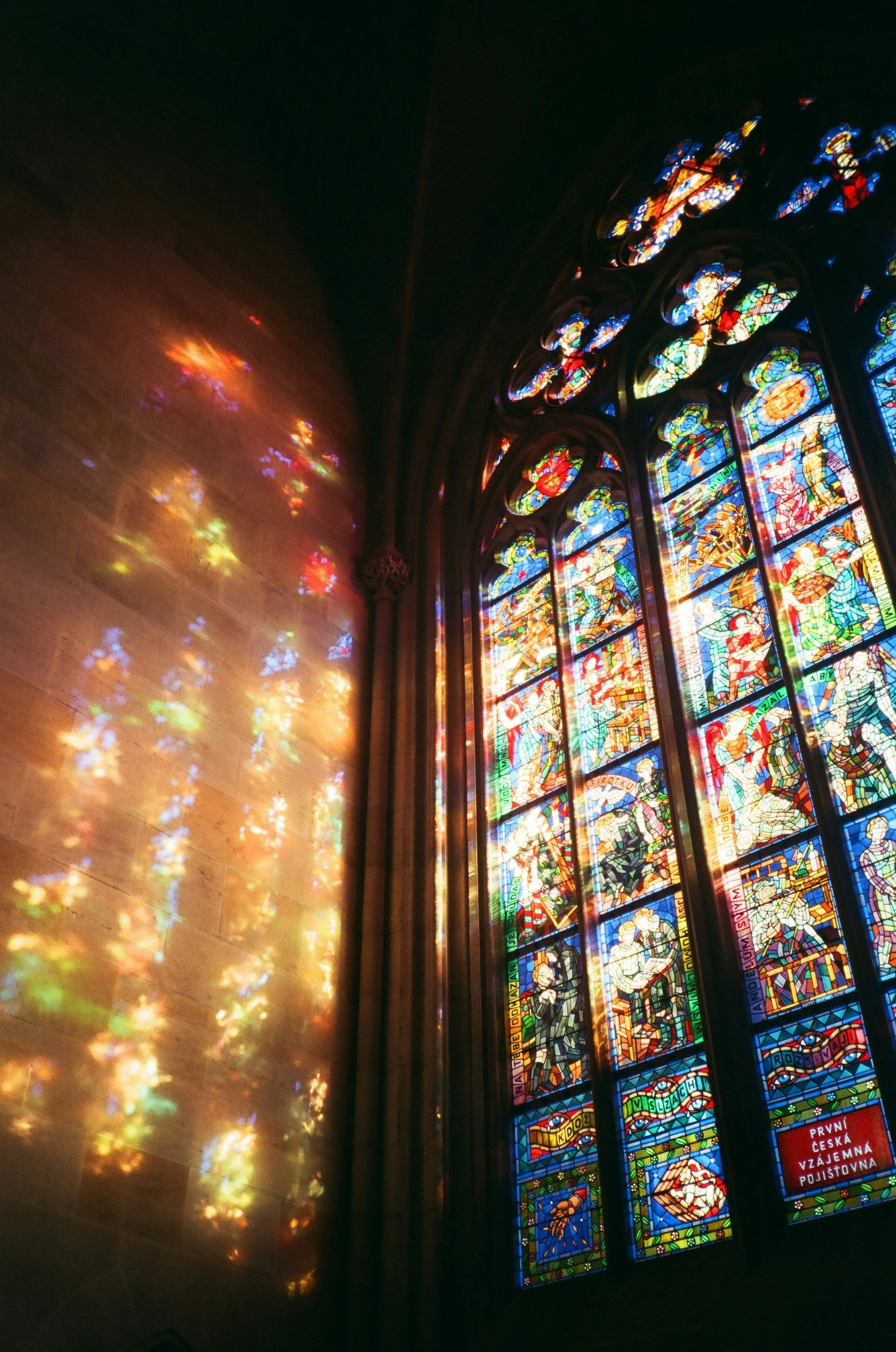
Photo by Klara Kulikova on Unsplash

We have an additional advantage, while secular psychotherapy aims to treat the mind or psyche, in the Church our pastoral counselling also seeks the healing of the nous, the “eye of the soul” or spiritual centre, and through participation, too, in the life-affirming and medicinal Sacraments. We have been blessed with many spiritual tools to heal and to comfort the deeply distressed, to remind them as often as might be needed, they are not alone—and that one keeps living because they are precious and unique in the divine providence of their Maker, that He has wonderful plans for them from even before they were born: “Before I formed you in the womb I knew you, before you were born, I set you apart” (Jer. 1:5). Be an active listener and remind the broken brother or sister, their story matters and that their best days are still ahead. Celebrate their achievements and inspire them to keep moving forward with endurance and perseverance. This dreadful sadness that is at this very hour compressing their spirit, making it seem that all is lost, is not their final destination. We are not broken. We are healing. They are us and we are them. There is still work to do before we finish the race—and new opportunities to love and to be loved, to create and to inspire creation in others. Day by day, all will be well. Keep busy with meaningful things and surround yourself with sympathetic, gentle souls. A new day dawns tomorrow. Wait for it.

Questions that we can only answer under the firelight

“If it is possible, as far as it depends on you, live at peace with everyone.” (Rom. 12:18)

“For others, in spite of myself, from myself.” (Emmanuel Levinas) 

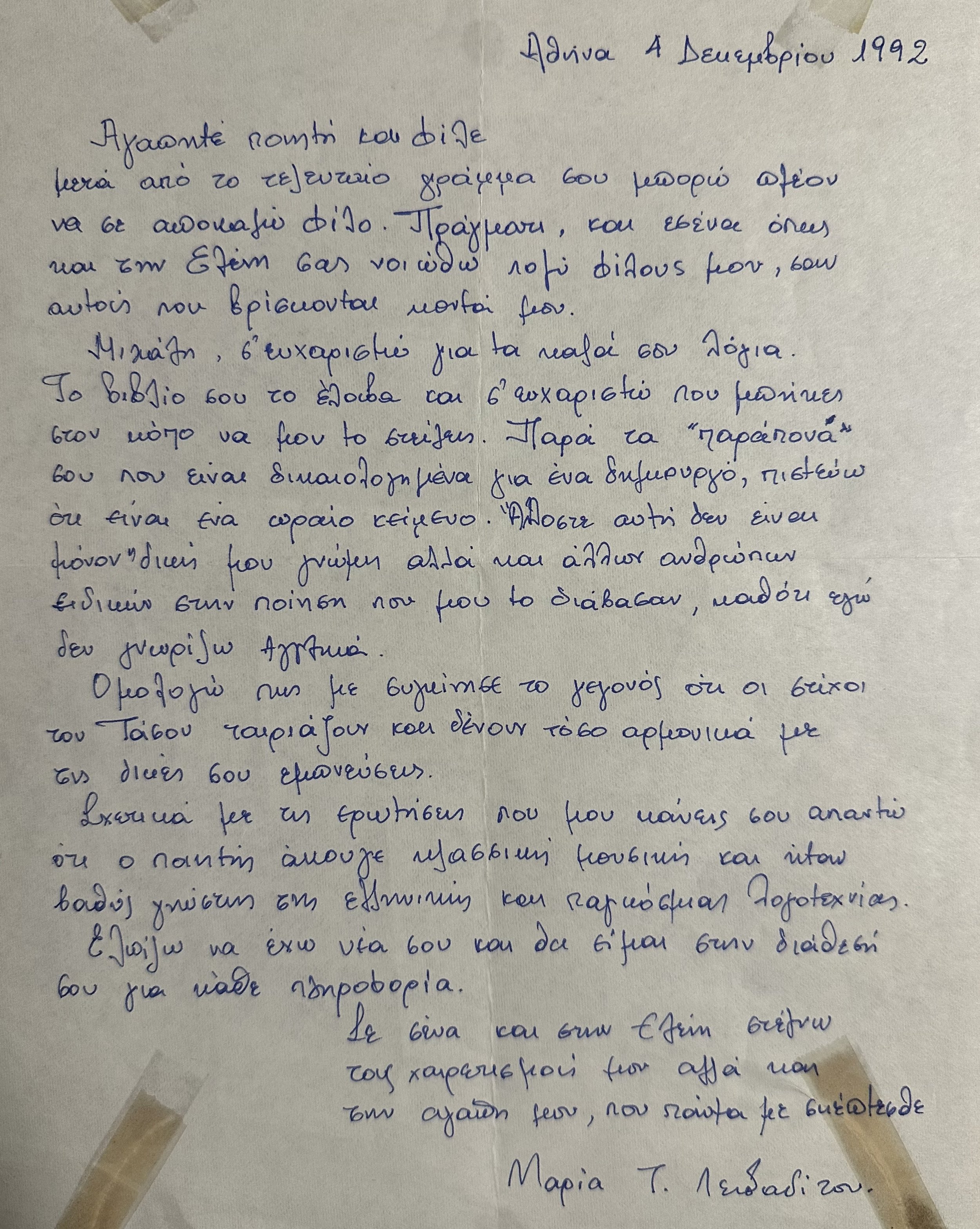
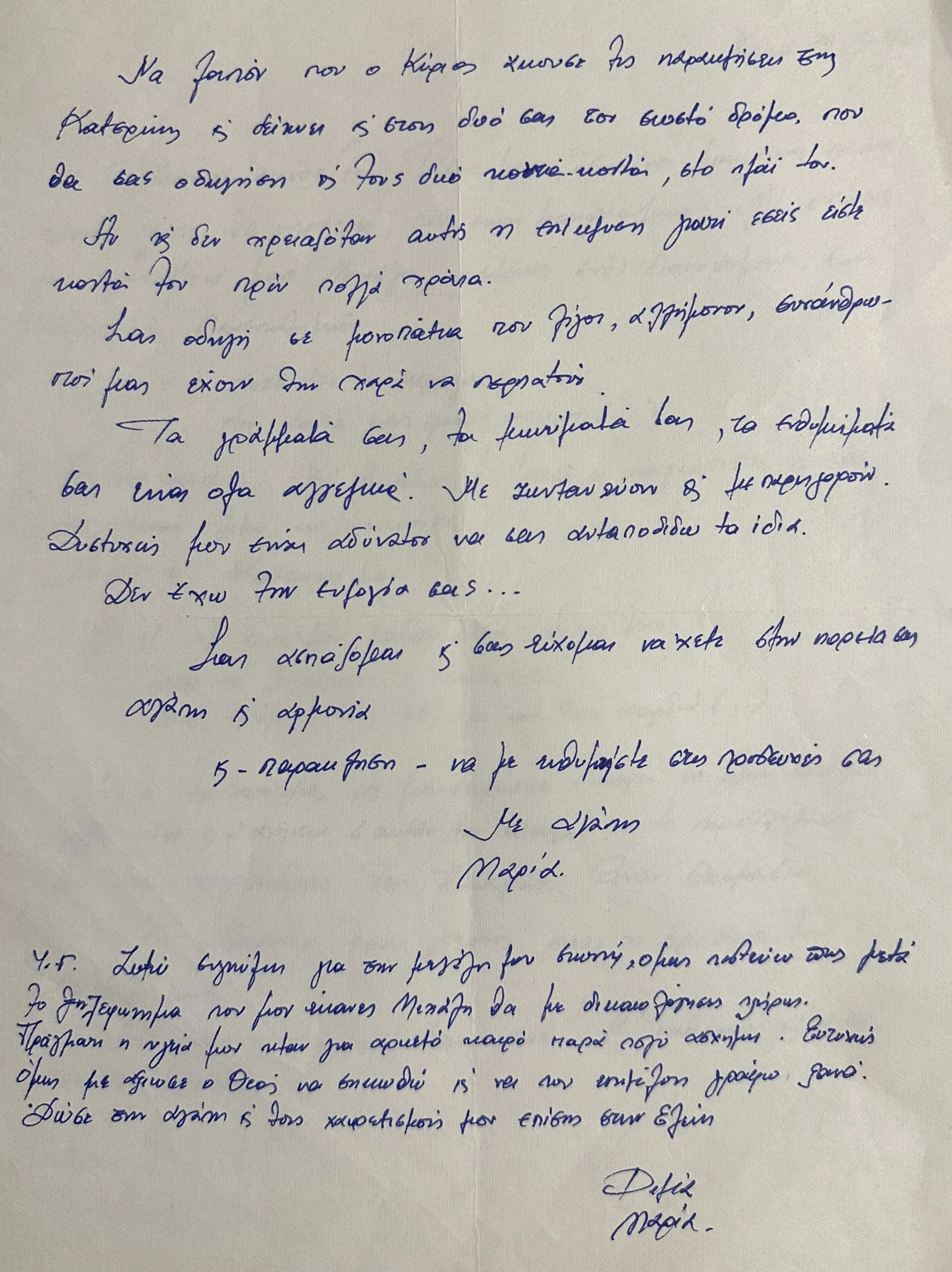
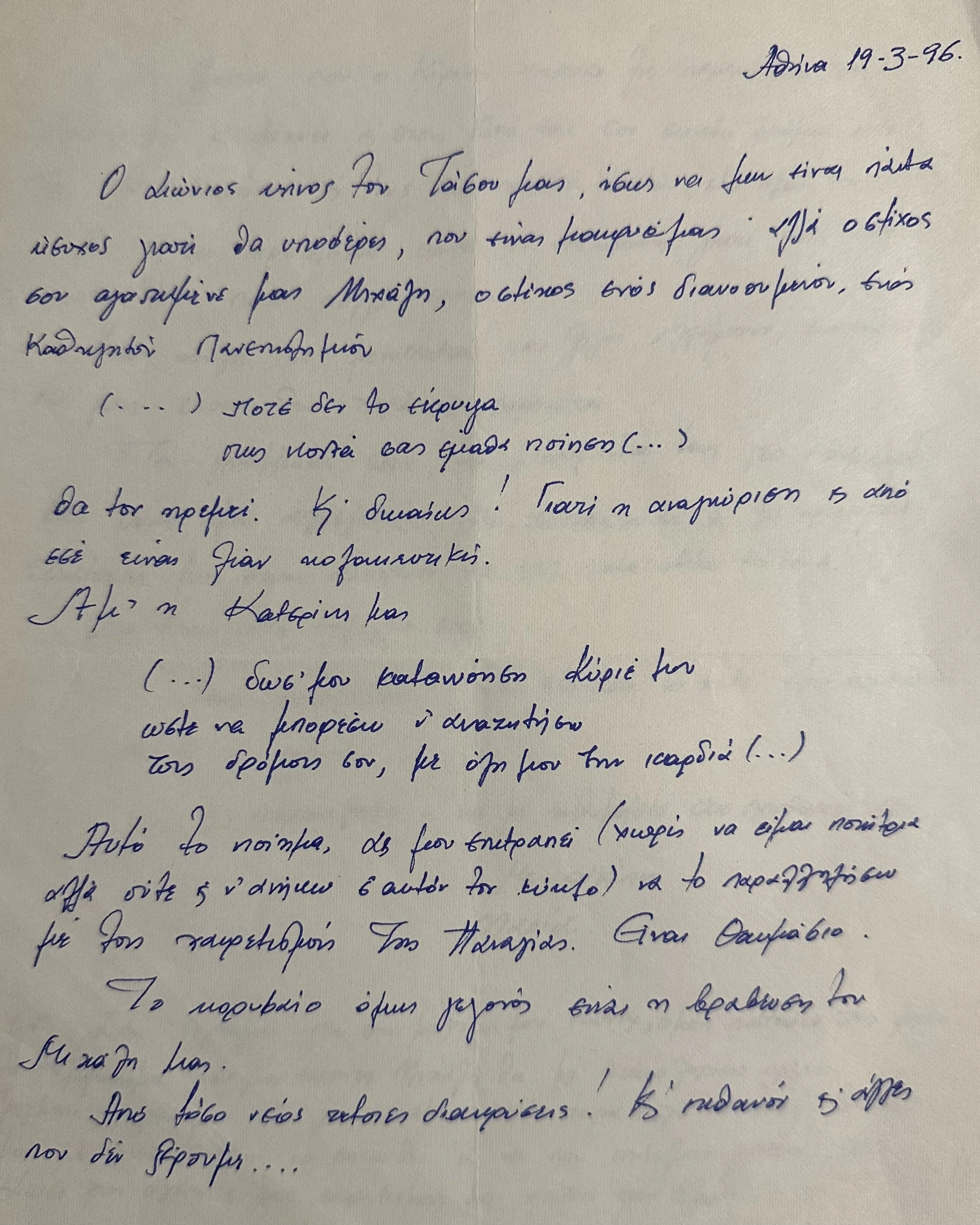
I recently received one of those beautiful letters from a friend that lifts your spirits and reminds you not only of the vital importance of friendship, but also that the world contains far more tender-hearted people than we might imagine. The letter, an email in truth, was sent to encourage me during this season of my journey. These wonderful words rich in compassion were to be understood as a sign of love and affection from a gentle and discerning soul. I reflected on this letter for some time and I have turned to it often, and to others of a similar humanity. What strikes me above all with such compassionate expressions of solidarity is something all of our true friends have in common, and this is not only the depth and elevation of their souls, but also their practice of giving others the “benefit of the doubt.” What is the benefit of the doubt? And what does it mean in the context of friendship but also in our broader communion with other people, or in other words, the Levinasian “Other”.

These oftentimes, life-giving words “the benefit of the doubt,” are, unless I am mistaken, a direct evolution from the legal principle “of reasonable doubt.” As flawed human beings ourselves we are severely limited to the truth, and could possess only a skewed perspective on reality. To give the benefit of the doubt will not rarely mean to dramatically change a life, to affect generations, and to even save a soul. It is to accept in ‘good faith’ that the other’s intentions were not malevolent or intended to cause harm, that whatever actions we might have misread as wrong were unintended or yes, even a mistake from a place of a momentary weakness or lapse of judgement. It is, of course, a lot easier for older souls to practise this precious charity on account of their familiarity of the human condition with all of its fragilities and contradictions. And the fact, that they too, have been the recipients of this grace, and are now paying it forward. One of the more significant reasons why this grace is withheld is its closeness to the ideal of forgiveness. Ordinarily, it can be difficult to distinguish between the two, though forgiveness is typically much harder, since it involves a reciprocal movement of humility and self-knowledge.

The benefit of the doubt might also challenge our own ethics, forcing us to confront uncomfortable truths about ourselves. This could in some instances prove frightening. We may come to believe that we are capable of what ‘bad’ we might suppose in others, and so we see in the other only that which we could perceive within ourselves. If we do not trust, we may begin to doubt our own capacity to be trustworthy. These are difficult questions that we can only answer under the firelight. What then are the enduring profits of presuming innocence and granting a second chance? In short, it can save a fellow human being from a lifetime of anxiety and anguish, and in some instances, as I have already written, literally save a life. An action of grace once seeded can bring delight to those who come after us and establish new friendships and communities of love; an action made in ‘bad faith’ can create enmities that once established will normally also replicate into the future. I must confess, despite my age and experience, I still cannot fully understand how someone can willingly punish another for a perceived wrong, knowing full well that in the end no good can ever come of it.

“As the Searcher of hearts, the Lord knows that men are liable to very frequent trespass, and that, having fallen, they often rise up again; therefore He has given us the commandment to frequently forgive trespasses, and He Himself is the first to fulfill His holy word. As soon as you say from your whole heart, ‘I repent,’ you will be immediately forgiven.” (St. John of Kronstadt)

https://pin.it/3pKNx83Fk | Faith hope Love art

My own heart is a long way from perfect. I will stray and have strayed from my creed, the one I still dare to preach. I am still learning “the good” (the agathon), praying that as the days pass, I remove as many barriers as I can in the pursuit of this virtue. People are inherently compassionate and charitable, this too I have found, when you thirst and ask for a cup of water, by far the majority will offer you that cup. And if we might remember this truth, giving the benefit of the doubt, not forgetting how delightful it could be both to the one and to the other, the offering of this noble gift becomes much harder to withhold. If you could allow me one further point, especially for my younger readers, this does not mean to be naive to the darker aspects of the human condition. In time, you will come to recognise these landscapes of brokenness, and through them you will enter those deeper places where the harvest is more bountiful still, for you will be asked to practise even harder things. This is the road of Gethsemane, the journey into the profound mystery and movement of love and forgiveness. One of the greatest things we can do in this life, is to give hope to the “Other” and to release them from their anguish that they might not only flourish, but that they themselves will soon enough pay it forward. Invariably, it will also bring out the best in ourselves, we will come nearer to our true name. Yes, I am more and more returning to old places and familiar spaces, but it is in truth all I know that could be of any use.

How Does One Deal With A Life Changing Moment

So we do not lose heart. Though our outer nature is wasting away, our inner nature is being renewed every day. For this slight momentary affliction is preparing for us an eternal weight of glory beyond all comparison, because we look not to the things that are seen but to the things that are unseen; for the things that are seen are transient, but the things that are unseen are eternal. (2 Cor. 4:16-18)

How does one respond to a new challenge in life, when almost overnight, everything changes dramatically? You look in the mirror and you recognise that your old physical self is to a large extent gone. There is denial. There is grief. And yes, in the middle of the tears and self-pity, an anger that could surprise you. Perhaps worst of all, the onset of a gnawing despair. You are in fact experiencing the inner and outer metamorphosis. All the self-help books in the world are of no use, for their premises are no longer relevant to you. The man looking back at you is not the man you once knew. The body you inhabited for sixty-five years can no longer serve you in the same ways. One can pretend to the world that these natural human emotions do not apply to them, that you have been able to rise beyond such fallible responses. Yet, and this much I must say, if you have belonged to the community of believers, and you have seen abundant evidence of Jesus Christ, the God-Man, at work in your life, then you will not question your faith nor put away the trust in the providence of your Creator. But your hitherto public stoicism, and those standard rejoinders to the problem of pain, as theologians have long framed this paradox—so much suffering in the world and still at the same time the goodness of God—will be thrown into upheaval and shaken to its core.

What this “thorn of the flesh” is for the present writer is entirely irrelevant. It is not the affliction itself that is of concern to him, nor is his experience at all unique. What he describes here is an undergoing that belongs in whole or in part, to at least some of his gentle readers. The question, then remains, how does one deal with a life-changing moment that has to some degree, made different much of one’s life. The saint, for there are saints who either live here in our midst or in monasteries or in faraway deserts, will reckon this as part of the soul’s journey toward redemption. Then there are too, the stoics, who courageously accept it all as part of the greater story of the cycle of life. But there is something very much in common to both of these positions, the acknowledgment whether be it manifest or tacit, of the joyful-sorrow of life and of the inevitability of our report here in this world one day coming to its close. From Siddhartha Gautama, to Socrates, to Saint Paul, to Blaise Pascal, to Martin Heidegger, to Sophrony Sakharov, to Viktor Frankl, to Irvin D. Yalom, to Dean Rickles, this ontological acquiesce is there in every profound thinker that has walked the earth. There are those winter seasons in which, as my dear friend Joseph Carvalko writes in one of his enthralling essays, that we are drawn to think of our souls in different ways until that time when they reach "that final purpose" (Paradox of Hope).

Pass then through this little space of time conformably to nature, and end thy journey in content, just as an olive falls off when it is ripe, blessing nature who produced it, and thanking the tree on which it grew. (Marcus Aurelius, Meditations)

When we are no longer able to change a situation, we are challenged to change ourselves. (Viktor Frankl, Man’s Search for Meaning)

https://stockcake.com/i/butterfly-life-cycle_3152617_1654139

So we live each day grateful for all we have been taught, not despairing of the new stories we will now live through, and ultimately grateful for these additional narratives we might now write down. For these things, the precious fruits of courage and perseverance are not at all outside the realms of reality and have been manifested in the lives of so very many. And more recently we witnessed this in the life of my late and much beloved Momma. Not long before she left us she “woke” from her deep sleep and in English (her second language which to this point she had almost completely forgotten) to say: “I saw Jesus. He said He loved me.” Her countenance was amazingly bright. Of course, one can interpret these fabulous words in different ways. We took them at their face value, and at that moment she gave us a vision of meaning above and beyond what I could hope to describe here, that change when even at its most difficult hour is not bereft of the light. Suffering can only be met head on, there are no shortcuts to the problem of pain. There on those hard edges of Gethsemane, where the human spirit is tested that it might be refined as gold, awaits the revelation of our true name written on the white stone (Rev. 2:17).

Our eyes and hearts can become opened to astonishing depths of love (now re-defined and re-experienced on account of our new condition) and to all-encompassing fields of compassion once only imaginable when we were at our very best—those days when we refused to chase away the birds from our fruit-trees and considered the practise of forgiveness as the highest expression of agape.

Even with all of the hard knocks and heavy collisions along the way, we all have a fabulously rich story to tell. Whether we can write it down or not, will matter only very little. The narrative will take on its own life to become our legacy. I remember an elderly monk from Mount Athos, Father E., who would refuse to wear laces on his boots. One afternoon after the refectory I summonsed the courage to ask him ‘why’ [and here I must confess to paraphrasing him a little]: “One must be prepared and on time for the unexpected.”

At different times I have wondered how I would respond

I do love the good-humoured mathematician and lay theologian John Lennox. Not only for his intellectual brilliance in articulating the apologetics of the Good News, in a manner evocative of the great C.S. Lewis, but also for the ways he has reminded me of a dear friend, the logos-inspired poet Les Murray. Yet there is something else as well. Especially given the present challenges in my own life, the charismatic Lennox has often spoken of “finishing life well.” This right counsel, takes us back to Saint Paul’s moral parenesis, which has inspired and lifted the spirits of countless souls across the centuries: “I have fought the good fight, I have finished the race, I have kept the faith” (2 Tim. 4:7).

https://pixabay.com/photos/flower-dandelion-wildflower-nature-7700011/

At different times I have wondered how I would respond if I were sitting in a specialist’s surgery, waiting to hear the results of medical tests for a potentially life-threatening disease. For instance, would I remain stoic upon hearing the word cancer? Would I break down, if only for a moment, terrified of what it could mean? Or might my reaction fall somewhere entirely outside what I had imagined? In truth, one never knows how they will respond to news—good or bad—until it actually happens. Is it, then, the same for a believer of a religious community, and particularly for one of its theologians? I was to learn this on a pleasant morning in Wollongong, in late January of this year, during a consultation with my empathetic urologist, Dr. R. It was not at all as one might have imagined. The news was delivered no differently than if a general practitioner were calmly informing you that it was nothing more troubling than a sore throat. Except that this time, it all appeared to unfold in slow motion. Each word carrying with it a resonance that would need to be newly explored and analysed: “I am sorry it is cancer—Michael, but it is not a death sentence.” For a few moments at least, it seemed as though I had stepped into another world. This is a place where the archetypes stood in sharper relief, and where at any moment they might cut straight through you.

This is the hour when one’s metaphysical beliefs, whether deeply theistic or commendably stoic are pulled apart and, for some, stretched to their breaking point. Suffering in its various guises, if we should allow it, can easily undo us. When death rises to speak in its own ex cathedra voice, there is, one way or another, little to say in reply. The Great Divide has spoken shāh māt ("the king is helpless")–Or is he? Maybe not quite yet. If you are familiar with Moritz Retzsch’s 1831 painting The Devil’s Checkmate and with the story of chess master Paul Morphy’s response, you will know what I mean. For those of us who belong to a religious community, how often have we heard, or ourselves declared, the words offered in consolation by the Prophet Hosea but later to be made famous by Saint Paul: “Where, O death, is your victory? Where, O death, is your sting?” (1 Cor. 15:55). The counter of every soul to such news is as unique as the individual response to our deepest joys or hardest sorrows. A range of emotions, natural to the human condition, can overwhelm us, and the comforting illusion that such things only happen to other people is fast destroyed. The reality is that it will happen to us all. Death comes, sooner or later—if not for us now, then to those we love, to our close of kin, and to our friends. And our hearts ache, too, at the daily images of lives taken in faraway places, without the blessings and benefits we ourselves have become ordinarily accustomed to. Perspective remains one of our most trustworthy teachers, and if we remain honest enough, it cannot fail us.

It all goes much too quickly. I could close my eyes and, for a few moments, go back to my untroubled teenage years, running about like a puffed-up bull on rugby league fields in Sydney and the country. Then before long I snap out of it. The mirror will make liars of us all. If we have not mentally prepared for this unavoidable and messy rencounter, one that philosophers and theologians alike agree will become the absolute test of our core beliefs, we are likely to panic and fall into those self-defeating emotions of denial and anger. Still, if we can get through this fiery trial and comprehend it as an awakening to something deeper and more nobler within us, then we will not only endure and persevere through it, but we will be initiated into revelations and lasting lessons we once believed beyond our reach. The giving and the asking of forgiveness becomes a commonplace experience. All manner of colour and sound become more vibrant and sharper. We can become humble, yet strong vessels of comfort to others. The expression of love and compassion are now as commonplace as our daily bread. Material aims and professional goals are much shifted or made altogether insignificant. Divine grace and moral strength can arrive in the most unexpected way. Saint Nilus of Sinai speaks in the tradition of Socrates (who posited that philosophy is a preparation for death): “You should always be waiting for death but not be afraid of it; both are indeed the real characteristics of a person who pursues wisdom.” This is the “memory of death” which the contemplatives of our major religious traditions practise, this they do in the most positive of ways as a reminder to cherish this present hour, and to not misuse the time we have each been given.

After a while these archetypical disclosures of the battle, should we open up ourselves to them, will allow for bursts of light to enter into our hearts. This is not to whitewash our suffering or our fears, these conditions are all too real, and they will leave their rough mark on both ourselves and on those we love, but how we respond to this confrontation and where we allow for the dark side of our imagination to take us, is what altogether matters at present. There will be the dark night when for a believer it could appear that the Father is scandalously absent, or for our other brothers and sisters to seem that it has all been meaningless. These are very much the same feelings of inner collapse and that dread condition beyond the disease of the body—Søren Kierkegaard reflected in these terms when speaking on the “sickness unto death” that is, the deepest of despairs. Our modern existentialists have similarly spoken of this paralysing angst, as “the nameless fear”. It is not out of place, then, to recall that as a young student of divinity many decades ago now, I was struck by this fascinating revelation, that in the New Testament Gospels, the God-Man’s most repeated exhortation was not to be afraid: “Take courage; it is I, do not be afraid” (Mk 6:50).

On the Overwhelming Power of Forgiveness 

Do not judge, and you will not be judged. Do not condemn, and you will not be condemned. Forgive, and you will be forgiven. (Lk. 6:37)

He who is devoid of the power to forgive is devoid of the power to love. There is some good in the worst of us and some evil in the best of us. When we discover this, we are less prone to hate our enemies. (Martin Luther King, Jr.)

Absolutely nothing will help us if we are not lenient toward the weaknesses of men and forgive them. For how can we hope that God will forgive us if we do not forgive others? (St. Nikolai Velimirovich)

When we are able to see the suffering in him or her, and see that that person is a victim of his own suffering, then it's easy to forgive. Recognize the suffering. Understand the suffering. And by having the desire to help that person to suffer less, you will be able to forgive very easily. (Thich Nhat Hanh)


To forgive, to truly forgive, to wipe the slate completely clean, is beyond the capacity of most of us, if only because we are creatures made of memory. From this arises an old, oft-repeated truth: I can forgive, but I cannot forget. And yet, we do surely try. On those occasions when we might succeed, there is a joy that settles upon the heart, a peacefulness, something not easily described. Call it a lightness of being, or even an acceptance of the foibles of the human condition to which we are all subject. When I look back on my own life, I find that some of my deepest joys and my most enduring hurts have to do, above all, with the asking or the giving of forgiveness. We often read that asking for forgiveness is harder than offering it. I have found, however, that both of these life-changing charisms are equal in measure, though each demands a different kind of humbleness.

To ask the other for forgiveness is harder in the first instance because it will normally mean that we must make the first move, and so we put ourselves in an extremely vulnerable position. If this action of opening our heart to another is rejected it can deliver a mental pain to rival, or in fact be worse, than a suffering we might feel in the flesh. Particularly when the rejection comes from someone we have loved. And often in the cruellest form of all: silence. Such an experience can unleash a devastating range of emotions, from a sense of worthlessness to having one’s integrity and intentions called into question. How, then, does one respond to such a brutal rejection? The pain if it be possible is compounded, if we should happen to hold a theology that will see in the other the very Image and Likeness of God.

There is, needless to say, no simple answer but only what our own hearts reveal to us. One thing we must not do is allow another, whose heart does not wish to embrace ours, to extinguish our spirit. Our souls are far greater and infinitely richer in their potential than any hard rejection we might face. To dwell on this truth alone is to make room for divine providence to take its course. At the same time, we can never know what tomorrow may bring, even the joyous possibility of reconciliation. Compassion never ceases to amaze, for even the greatest of enemies have, in many instances, found their way back to each other. What has brought me comfort is carrying the other’s name into prayer. Admittedly, after a strong struggle, that name grows sweet, until the pain itself is almost forgotten. There is a mistake many of us have made, and it is a compulsion that given our angst is not difficult to fall into. We try to get the other to bend their compassion towards us by hammering repeatedly on their door when they have made it clear they have shut us out. By continuing to ‘knock’ we not only do an additional harm to ourselves but also to the other whose time has not yet come. It pulls us further into our own despair, and it hardens the heart of the other. Let us make our peace with a sincere and genuine spirit and then turn towards the souls who love us and see in us not only our heaven-sent gifts, but also that which is common to us all, our brokenness and need for acceptance.

Now we come, let us say, to the flip side of the coin. And for a large number, this has proven the more difficult, if only because once we forgive, the memory of the injustice committed against us remains. Once more, in such matters, we can only speak from experience and learn best we can from the wisdom writings of those who have gone before us. To forgive demands the giving of the benefit of the doubt for a trust has normally been broken, but also the practice of other-compassion and an outpouring of love. This forgiveness is rarely easy when we are young. Early in life, lacking a broader existential perspective, we tend to see the world in stark polarities. We have not yet come to a nuanced understanding of the complexities and contradictions of the human condition. Concepts such as loyalty and betrayal, yes, undeniably important, assume almost mythical proportions when life is viewed through a murky lens.

As we grow into our middle and later seasons of life, a precious awakening occurs, like the shock at suddenly seeing the iridescent shine on a drake’s head or the exhilaration of being introduced to Bruckner’s symphonies for the first time. We come to the self-realisation that we, too, have missed the mark. Jung would speak in terms of “individuation” and of coming face-to-face with our shadow. We have all sinned and fallen short of the glory of God. Looking at the accusers who brought the woman caught in adultery before Him, the God-Man responds: “Let any one of you who is without sin be the first to throw a stone at her” (Jn. 8:7). And who amongst us would claim to have never been a prodigal or has not considered pulling the arm back before casting the stone? Not only in biblical but also in those inspirational Levinasian terms, the “Other” is my salvation and not my hell. We are all of us, boats in the ocean, with rust and brine on the waterline.

Put in more earthly language, none of us is perfect. Though we might sometimes dare to convince ourselves that we are at least a little more perfect than the other. And who has not? So, then, forgiving the other for misdemeanours that we ourselves could be guilty of, is not as impossible as it once could have been. In this way, too, bringing the other to prayer, and allowing time to do its work, can become a great liberation for the soul. This is not to idealise forgiveness nor to trivialise the hurt that has been done; to forgive a grievous wrong demands an act of moral courage. Yet, in that one act alone, power is paradoxically restored to the one who forgives. This is the charism of the transformative power of love, for it endures, it does not fracture nor can it be broken, like a young oak tree that grows to become “windproof” as it matures. By far there are more gentle and compassionate people in the world than those who would will us harm. Let us allow for the possibility that we are acting in good faith.

Forgiveness is not a question of prescribed rubrics, in either its asking or its giving. It remains a profoundly personal act. Nor is it always a decision of a single moment. In any case, it cannot be hurried, especially when deep trauma is involved. Boundaries may need to be initially set. There is no “one size fits all” formula, any more than there is a single eye colour. What remains essential, if forgiveness is what we seek, is prayer, patience, and the belief that the potential for the redirection of another soul is rarely absolutely lost. Over time, forgiveness draws us further into those tremendous realms of self-sacrificial love revealed by Christ on the Cross, who forgives even as He is being executed (Lk. 23:34). From this mystical place, the thinnest divide between divine and human, the greatest graces and mysteries will flow. 

Finally, if I may add a personal reflection drawn from my own experience and from listening to others during my earlier vocation as a spiritual advisor. Asking for forgiveness liberates the soul from its guilt and resentment, and allows for the heart to be loved again. As much as we need creativity to survive, we also need to practise forgiveness so that we may live our humanness to its fullest expression. And for those who are able to forgive, this one act of grace alone, renouncing the claim that they once held over the other, can reverberate across generations. It can even save a brother or sister from death, for we know there are many ways in which one can die. It will foster beautiful friendships, or completely destroy them should we hold on to the bitterness. Rocks can crack bit by bit to then fall apart under the stress weathering of the sun. And such is the power granted to us from our Maker (or, indeed from the Universe) that with a single word—yes— (or, no) we can alter the direction of the future. The temptation is to forgive yet still deny access to those we have forgiven. For those of us who are members of the community of believers, we are asked to discern what it means that God Himself remains forever open to the cry of our lament and requests for mercy.